RI 8507 and Construction Vibration: Know the Scope Before Using a Limit
The 1980 USBM RI 8507 report studied blast vibration and residential houses. Its own scope notes matter when choosing monitoring methods for other building types and construction conditions.
A vibration limit is only useful when the study behind it applies to the structure and vibration source being assessed. STRAAM’s critique of RI 8507 asks practitioners to read the full report, including its stated limits, before applying a simplified threshold to a different building or project.
What RI 8507 studied
The U.S. Bureau of Mines published Report of Investigations 8507 in 1980. Its subject was structure response and damage produced by ground vibration from surface-mine blasting. The NIOSH record describes measurements from 219 production blasts at 76 homes.
The report says its response findings apply to residential-type structures with wood-frame superstructures. It cautions that the values do not apply directly to multistory steel-frame buildings or large structures with masonry load-supporting walls, whose natural frequencies may be lower.
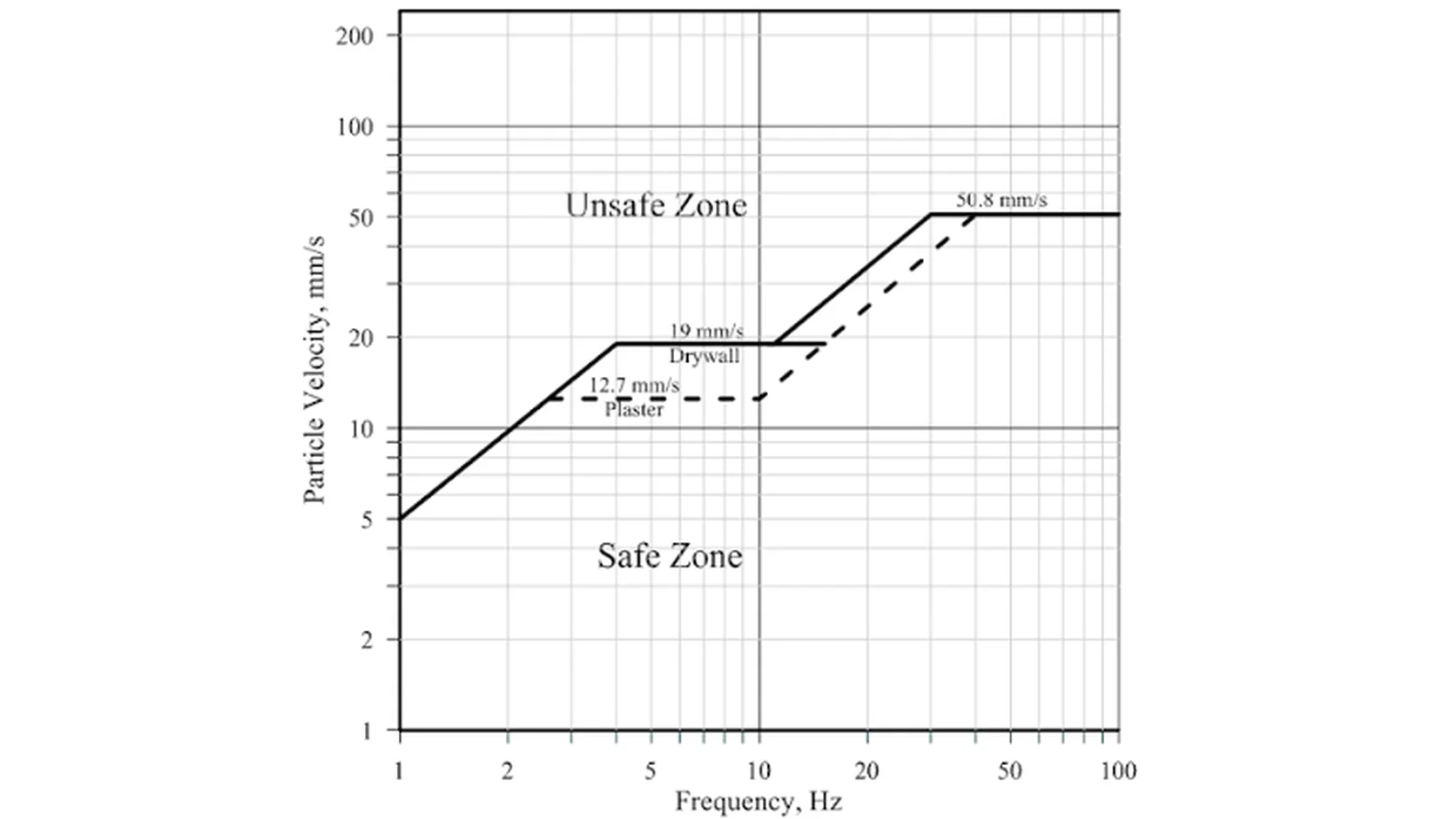
The report recommends peak particle velocity as the primary ground-motion measure for assessing blast-damage potential in residential-type structures and for regulatory purposes. It also says that using peak particle velocity alone can oversimplify engineering, design, or research involving varied structures and vibration sources. In those cases, it discusses direct measurement of structural response—preferably dynamic strain—or model-based prediction, such as response spectra.
Why the scope matters
RI 8507 is a research report about a defined setting; it is not a universal construction-vibration code. A value derived for residential houses exposed to mine blasts should not be treated as automatically transferable to every building, foundation, vibration source, or project. Applicable local rules and project specifications still need to be identified.
The report’s discussion of frequency, structural response, and the characteristics of the source also shows why one ground-motion number may not answer every engineering question. STRAAM’s critique argues that a structure-specific view is especially useful for urban buildings and construction work where the building type or vibration source differs from RI 8507’s study population. That is STRAAM’s recommendation, not a rule imposed by RI 8507.
Choose monitoring for the building and the question
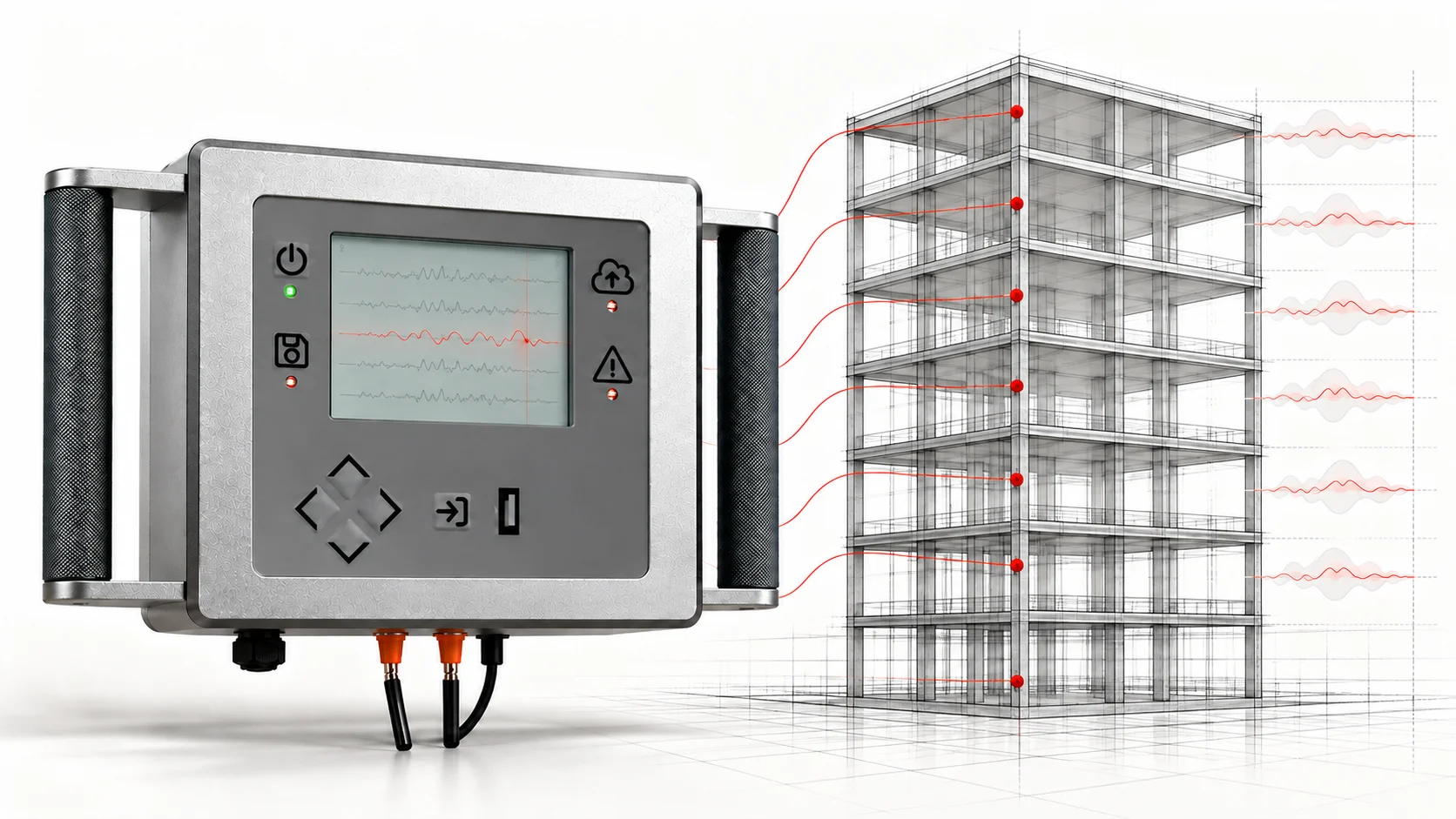
A project team can begin by identifying the protected structures, their known condition, the construction activities, and the decision the monitoring must support. Depending on the project, a qualified engineer may recommend documenting a baseline, recording ground motion, measuring building response, reviewing frequency content, or combining several methods.
Structural response or spectral analysis can add context when a building falls outside the limits stated in RI 8507. It does not make every vibration harmless, and a change in measurements is not by itself proof of damage. Thresholds, sensor locations, interpretation, and the response plan should be set for the specific structure and project.
Sources
More from the archive
Keep exploring the evidence.
Browse all insights
Baseline Dynamic Signatures: A Reference for Continuous Monitoring
A baseline dynamic signature records how a structure responds before monitoring begins. Repeated measurements can then help engineers identify changes that warrant investigation.
Read insight