Baseline Dynamic Signatures: A Reference for Continuous Monitoring
A baseline dynamic signature records how a structure responds before monitoring begins. Repeated measurements can then help engineers identify changes that warrant investigation.
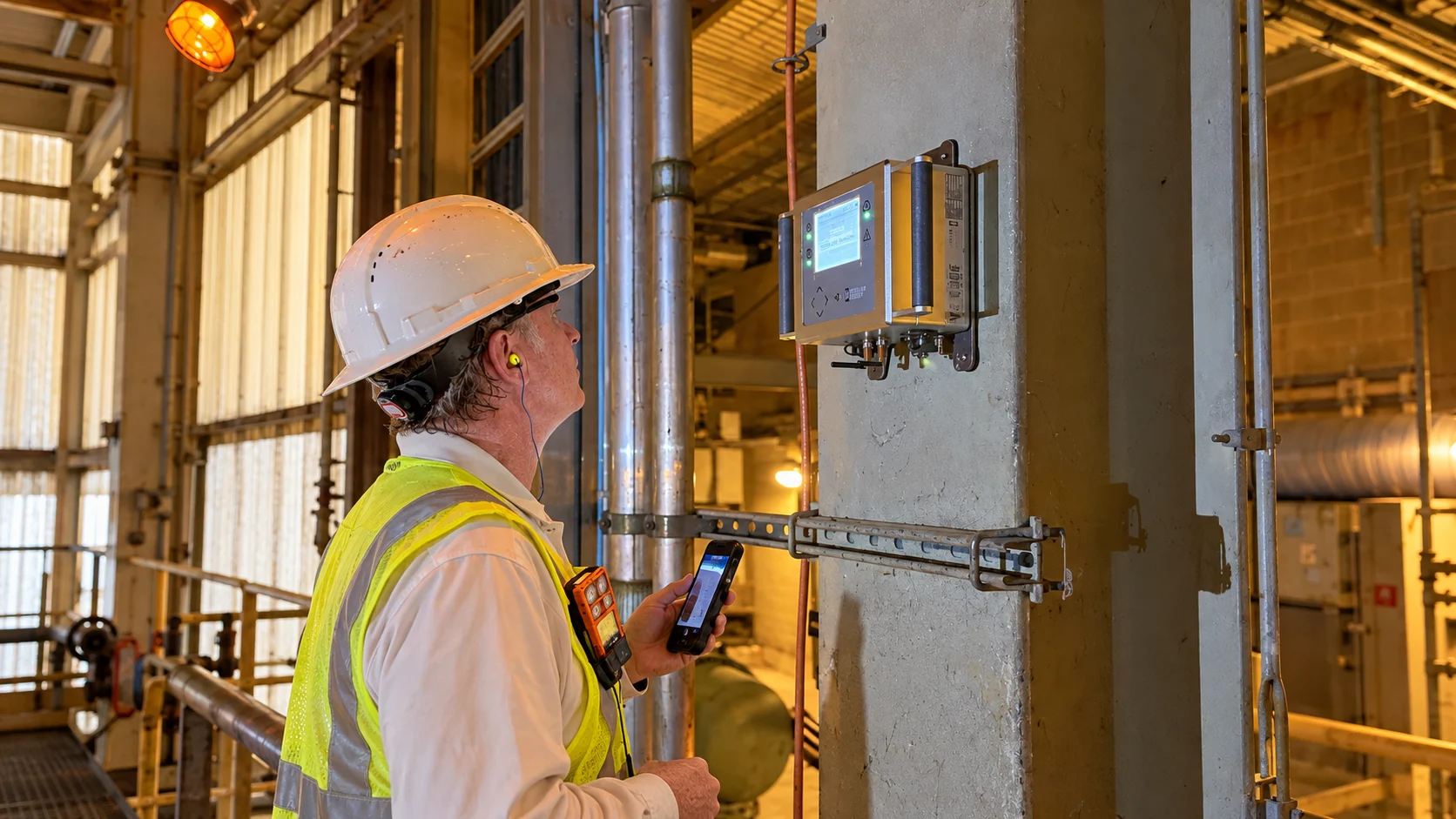
A monitoring system becomes more useful when it can compare current measurements with a known reference. STRAAM calls that reference a Baseline Dynamic Signature (BDS): a record of a structure’s measured response under its initial conditions.
Establish the reference
STRAAM’s source describes collecting acceleration data under ambient conditions and processing it to identify resonant frequencies. It describes capturing the first three vibration modes across the structure’s X, Y, and Z directions, with mode shapes and damping characteristics available for analysis. Additional resonances or irregularities may point to questions for an engineer to examine.
The baseline report then provides a comparison point for later measurements. An optional simplified finite-element model can be calibrated against the measured signature to represent the structure’s observed behavior. The source describes model calibration as optional, not a prerequisite for monitoring.
Compare measurements over time
In continuous monitoring, sensors at selected locations collect new response data and compare it with the baseline. STRAAM describes an online platform with current and historical data, threshold settings, and email or text alerts. Its overview states a data collection rate of 200 samples per second; actual instrumentation and sampling should be confirmed for the specific deployment.
Changes in resonant frequency, damping, or mode shape can provide evidence that structural behavior has changed. Tilt monitoring can add another signal. STRAAM’s source describes high-precision tilt measurement and notes that temperature and loading can also affect tilt. The source also describes Random Decrement (RANDEC) analysis to study amplitude-dependent damping.
These measures are indicators for review, not standalone diagnoses. A shift may reflect environmental conditions, operating loads, a sensor or installation issue, or a structural change. A damping curve or alert alone does not prove that a crack has formed or quantify remaining capacity.
Make the alert actionable
Before installation, define what each threshold is meant to detect, who receives an alert, who verifies the data, and who decides whether to inspect or restrict use. Set thresholds for the structure and project, and document the conditions that make a comparison meaningful.
When an alert occurs, the team can first check sensor health and relevant conditions, compare the event with the baseline and recent history, then escalate credible changes to the responsible engineer. The record should preserve both the measurement and the decision that followed.
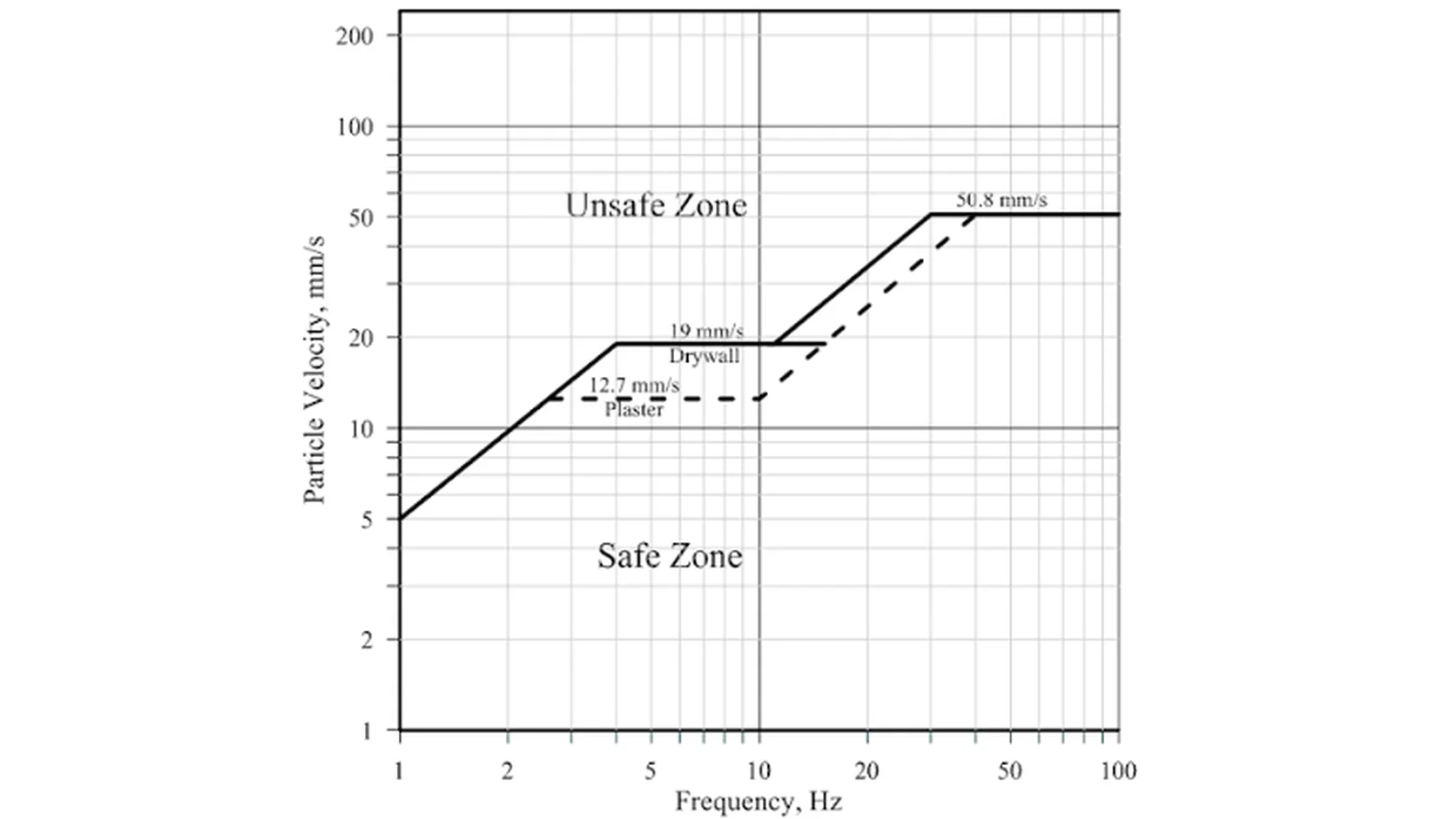
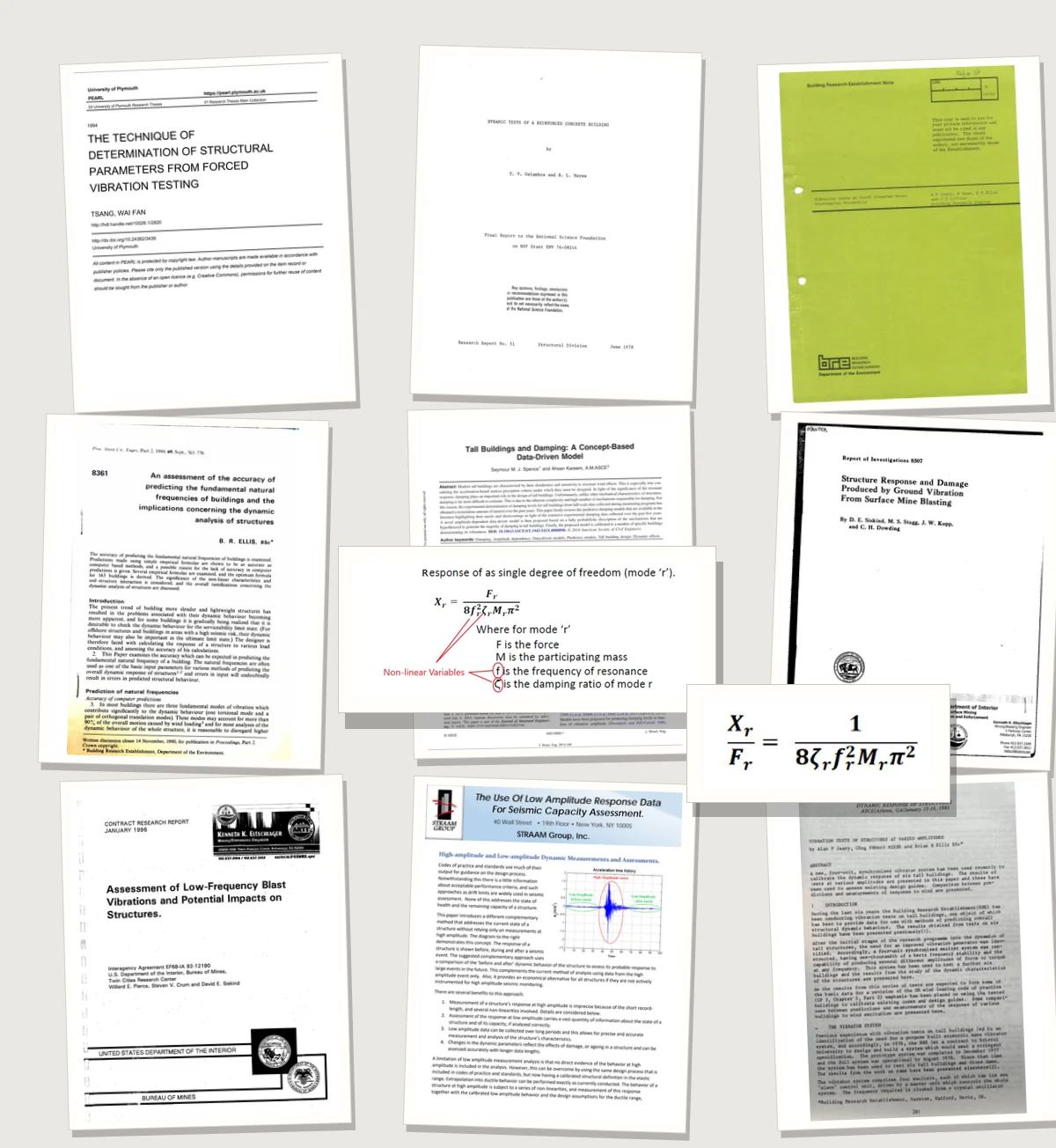
For nearby construction or other vibration sources, monitoring may also need to distinguish ground motion from the structure’s response. The original RI 8507 report discusses why structural response and frequency context matter for structures outside the residential homes that formed the core of its study.
A baseline does not answer every future question. It gives the engineering team a better starting point for asking them.
More from the archive
Keep exploring the evidence.
Browse all insights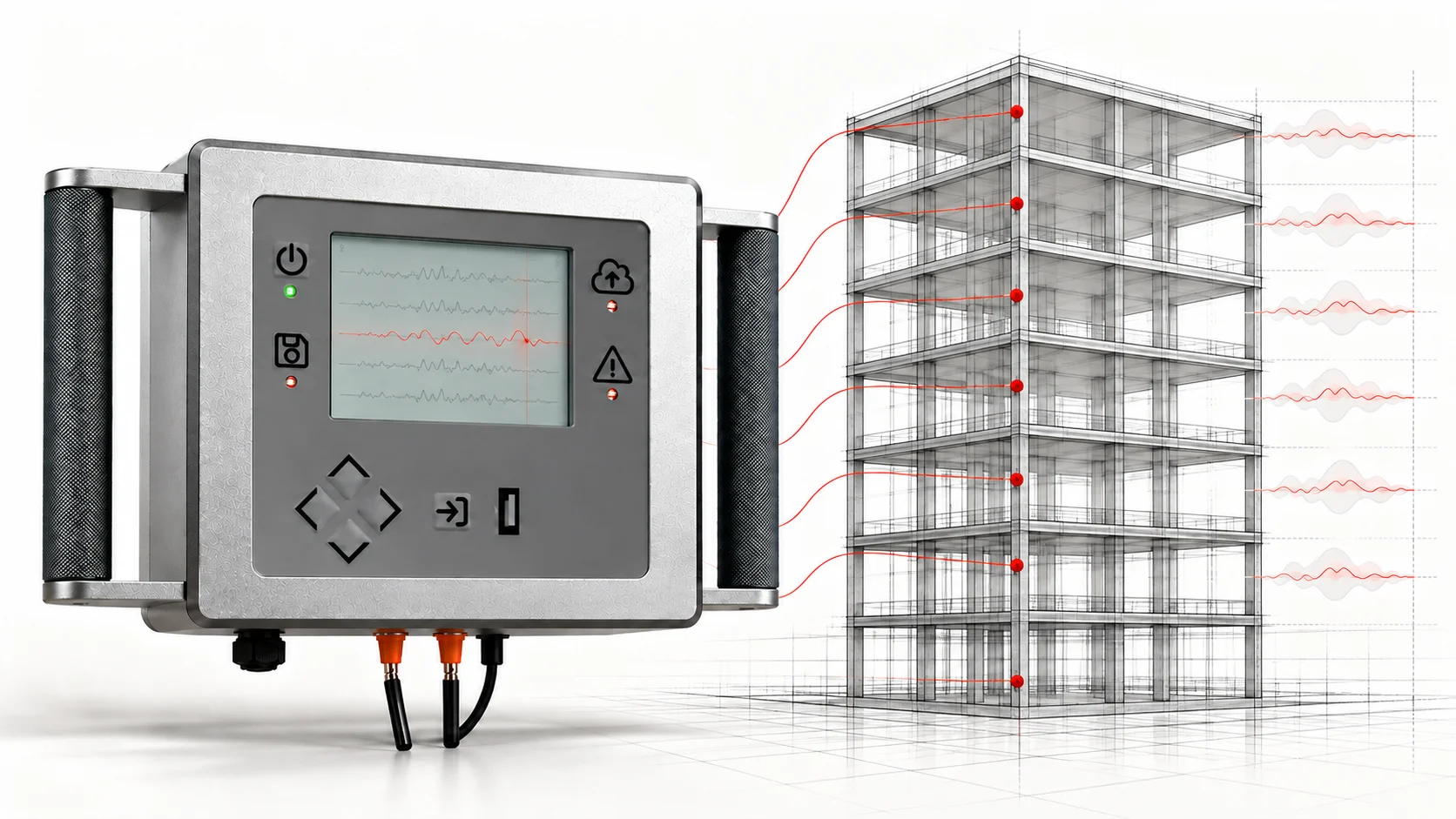
STRAAM Gen 5: Structural Assessment and Monitoring in One Platform
STRAAM’s Gen 5 overview describes a platform that combines short-duration structural dynamic assessment with continuous monitoring, cloud reporting, and alerting for buildings, bridges, and dams.
Read insight