Florida’s Structural Integrity Inspections: What the Law Requires—and Where Testing Fits
Florida’s milestone-inspection law sets a defined process for many condominium and cooperative buildings. Here is what it requires, where additional testing may fit, and how STRAAM’s recommendations differ from the law.
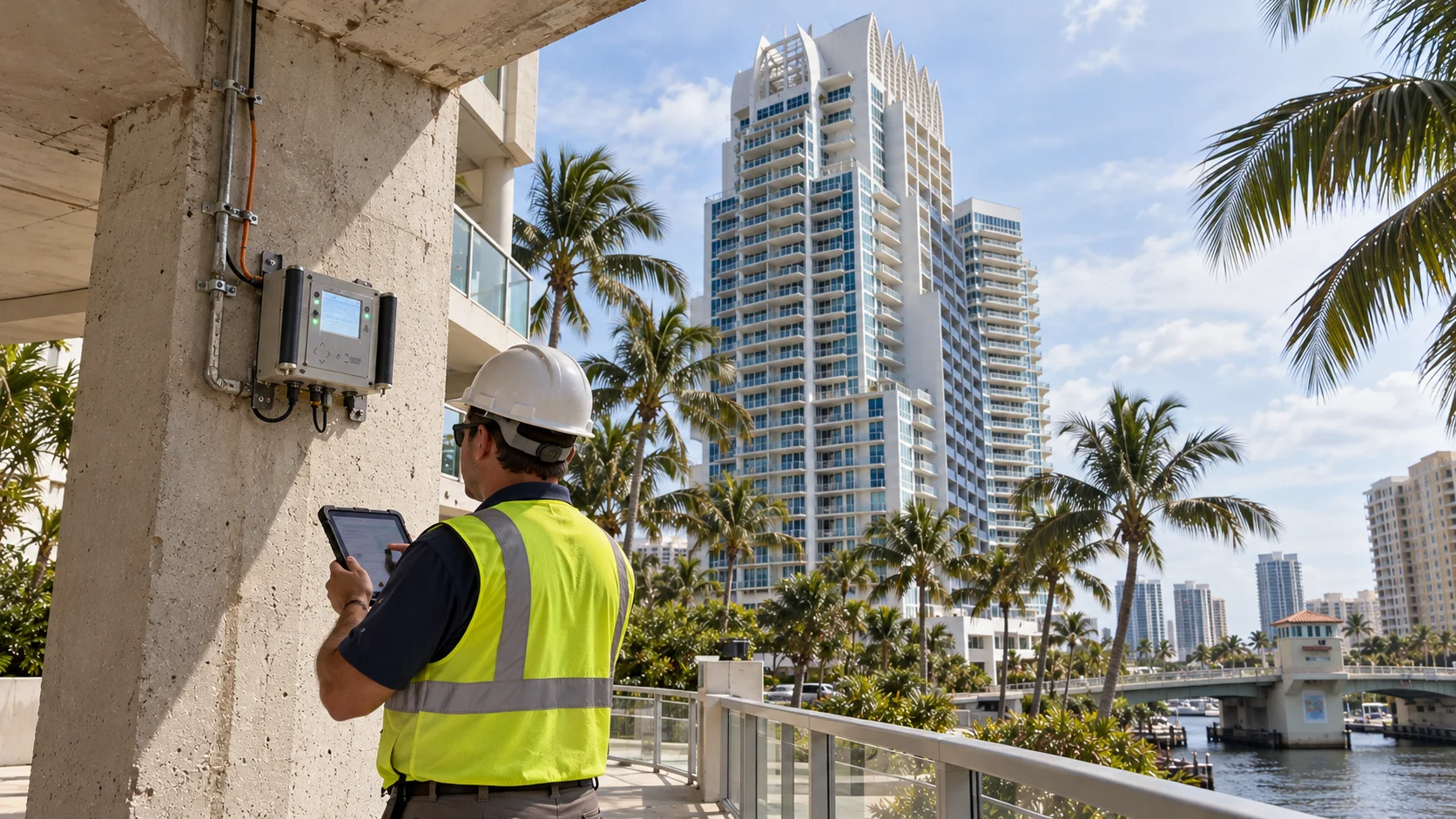
Florida’s milestone-inspection law establishes a structural inspection program for many aging condominium and cooperative buildings. It defines who is covered, what the initial inspection includes, and when further investigation is required. It does not prescribe one universal testing method.
What Florida law requires
Under Florida Statutes section 553.899, a milestone inspection generally applies to a residential condominium or cooperative building that is at least three habitable stories tall. The first inspection is due by December 31 of the year the building reaches 30 years from its certificate of occupancy, and every 10 years after that. A local enforcement agency may set an earlier, 25-year milestone when local circumstances, including environmental conditions such as proximity to salt water, warrant it.
A phase-one inspection is a visual examination of habitable and nonhabitable areas, including major structural components, by a Florida-licensed architect or engineer. The professional provides a qualitative assessment of structural condition. If no signs of substantial structural deterioration are found, a phase-two inspection is not required.
If phase one identifies substantial structural deterioration, phase two must follow. The inspector determines its scope and may direct destructive or nondestructive testing where needed to assess distressed areas. The statute asks the inspection to determine whether the building is structurally sound and safe for its intended use, and to recommend further assessment or repairs as appropriate. The report must identify the inspection method, material deterioration, recommended repairs, unsafe conditions, and items needing further inspection.
The law excludes surface imperfections unless the architect or engineer determines that they indicate substantial structural deterioration. It also states that a milestone inspection is not a determination of compliance with the Florida Building Code or fire-safety code.
Where standards and testing fit
ASCE lists Guideline for Structural Condition Assessment of Existing Buildings (11-99) as guidance for assessing existing buildings and their materials. ASCE also describes its newer MOP 158 as a user-friendly adaptation of the 11-99 guidelines. These references can inform professional assessment; their existence does not make a particular test mandatory under section 553.899.
A visual inspection is an essential first step, but concealed components, inaccessible connections, or uncertain material properties can leave questions that require additional investigation. The law gives the responsible inspector discretion to direct testing during phase two and requires its scope to match the areas of distress.
STRAAM’s recommendation
The supplied STRAAM paper argues that measured structural response can add system-level evidence when visual observations and available records leave uncertainty about how a building performs. It recommends considering an in-situ load test, including dynamic-response measurements, as a way to compare measured behavior with engineering expectations.
That is STRAAM’s engineering recommendation, not a blanket statutory requirement. A measured response is one source of evidence; its meaning depends on the structure, test design, acceptance criteria, and interpretation by the responsible licensed professional. It should not be presented as a stand-alone guarantee of capacity or safety.
A practical review
Owners and their engineering team can ask what the inspection could access, what conditions remain uncertain, whether the report calls for further investigation, and why the selected methods are appropriate to the building. Any testing plan should be set by the qualified professional responsible for the assessment.
Sources
More from the archive
Keep exploring the evidence.
Browse all insights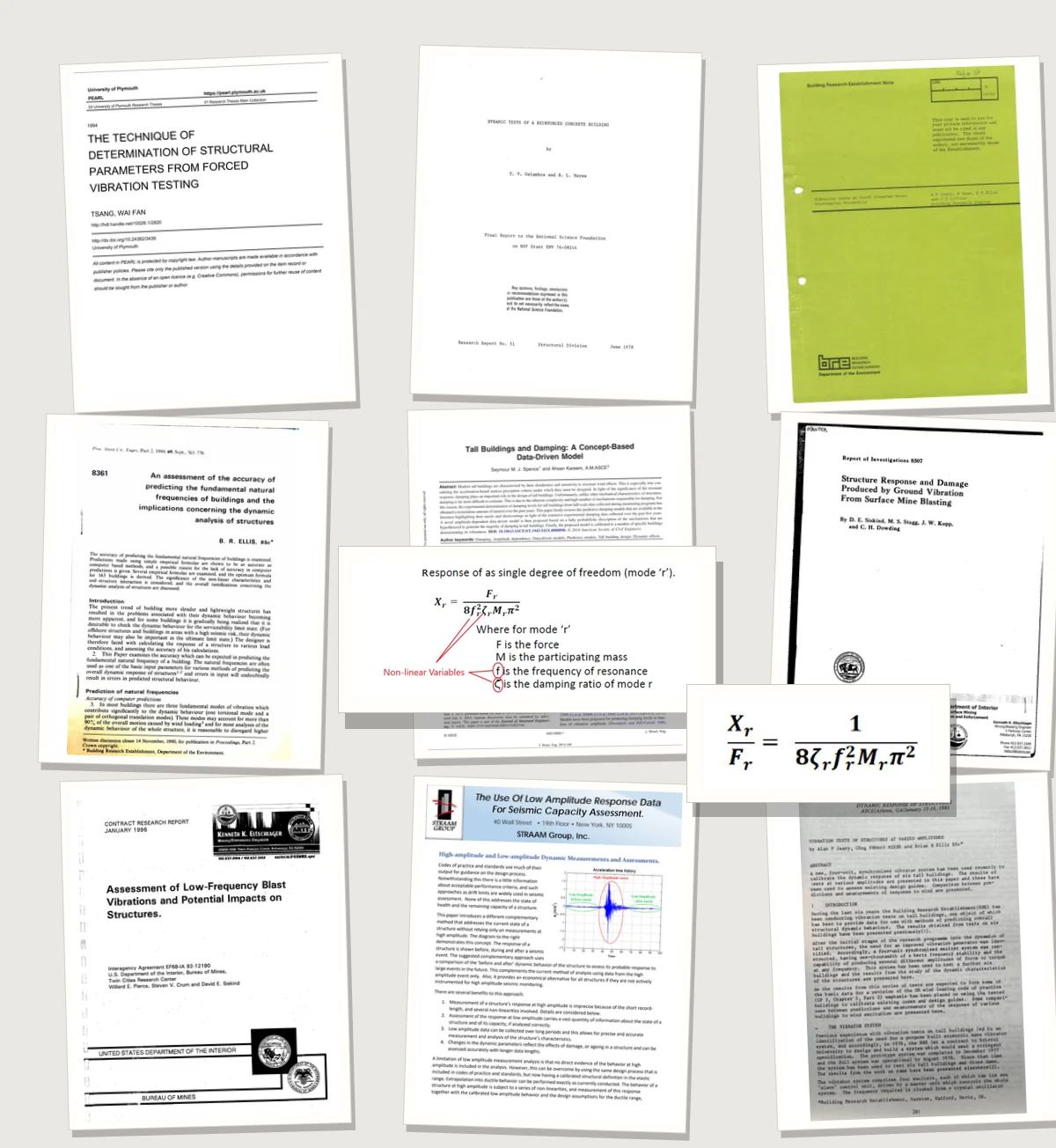
Research Foundations of Modal Analysis and Load Test Methodology
A source-led history of structural dynamic research and how it led to the development of STRAAM techniques and technology.
Read insight